

⏱ Time to Read: 8 min
If you’re shopping for riding mowers in central Pennsylvania, you already know the terrain doesn’t always cooperate — rolling hills, uneven ground, and properties that a push mower simply can’t handle in a reasonable amount of time. This guide walks you through the decisions that actually matter when you’re ready to buy a riding mower, so you invest in the right machine rather than the most advertised one.
TL;DR / Quick Summary
Buying a riding mower is a long-term investment — getting it right the first time saves you money, time, and frustration.
Key Takeaways
- Property size and terrain come first — those two factors narrow your choices before price ever enters the conversation
- Residential and commercial zero-turn mowers are built to different specifications; using the wrong type accelerates wear and increases repair costs
- Zero-turn mowers offer speed and precision around obstacles; lawn tractors (common at big-box retailers) offer versatility but slower mow times on larger properties
- Buying from a local dealer gives you access to parts, service, and honest guidance that online purchases can’t replicate
Table of Contents
What Type of Property Are You Mowing?
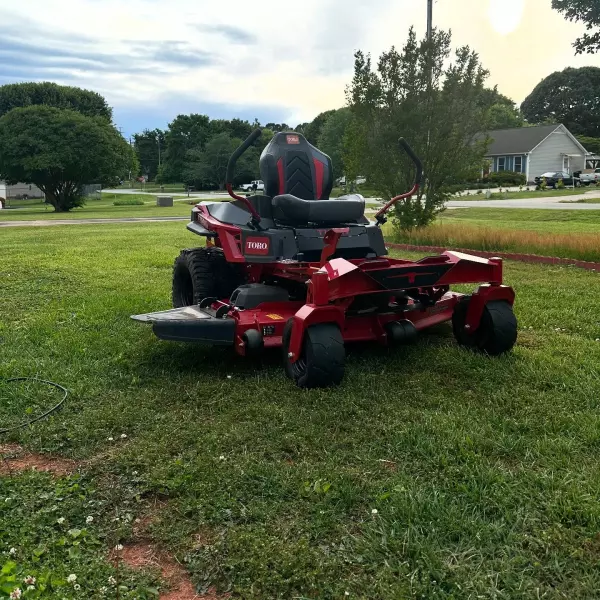
Start with your property — not a price point. The size, shape, and slope of your land determine which category of riding mower makes sense before you ever look at models.
- Under ½ acre: A push mower handles this range well. Riding mowers at this size are a convenience, not a necessity — though they’re worth it if mobility is a consideration.
- ½ to 2 acres: This is the core range for most residential riding mowers. A mid-size zero-turn with a 50″–54″ cutting deck handles this efficiently without over-engineering the job.
- 2 to 5+ acres:Larger zero-turns become practical here. On a 3-acre property, a well-matched zero-turn can save 45 minutes or more per mow compared to a standard lawn tractor.
- Slopes and hills: Any slope over 15 degrees changes things. Zero-turns are excellent on flat terrain but require caution on hillsides. For the rolling terrain common in Northumberland County, a slower speed and deliberate technique matters — or consider a walk-behind for the steepest sections.
Don’t stop at acreage. Walk your property and map the obstacles — tree lines, garden beds, fence lines, gate widths — before you decide on deck size or model tier.
Riding Mower Types Explained
The two most common types buyers compare are zero-turn mowers and lawn tractors. Here’s how they differ in practice — and why we stock one and not the other.
Zero-Turn Mowers
Zero-turns use dual hydrostatic transmissions to control each rear wheel independently, enabling a true zero-degree turn radius. This makes them fast and precise, particularly around obstacles like trees and garden beds. Experienced operators consistently cut mow time by 30–40% on larger properties compared to a standard lawn tractor.
Zero-turns come in residential and commercial grades — more on that distinction below. They’re the most efficient choice for any property where mow time matters.
Best for: Properties over ½ acre with a mix of open ground and obstacles. The larger the property, the more a zero-turn earns its keep.
Lawn Tractors
Lawn tractors are common at big-box retailers and have the engine in front with a mid-mounted deck. They can accept attachments — snow blowers, baggers, aerators — and are generally easier to operate on slopes because of their weight distribution.
The tradeoff is efficiency: a lawn tractor is slower to maneuver and takes longer to mow the same acreage. For most buyers who are serious about their property and intend to use the mower seasonally for years, a zero-turn is the better long-term choice.
Best for: Buyers who prioritize hillside stability and attachment versatility over mow speed.
Rear-Engine Riding Mowers
Compact and maneuverable, rear-engine mowers are built for tighter spaces. They typically carry 30″–33″ decks and are easier to store in a smaller garage or shed.
Best for: Smaller lots, restricted storage space, or riders who want the seated comfort of a riding mower on a sub-acre property.
What to Look For When You Buy a Riding Mower
When you’re ready to buy a riding mower, these are the specifications that drive real-world performance:
Cutting Deck Width Wider decks cut more grass per pass. A 50″–54″ deck is standard for most residential applications. Step up to 60″ for 3+ acres. The tradeoff is maneuverability — larger decks are harder to fit through gates and between tight obstacles.
Engine Power For a residential riding mower on flat to moderate terrain, 24–26 HP handles most conditions. If you’re regularly cutting thick grass, wet grass, or steep grades, size up rather than push the limits of an underpowered engine.
Transmission Type
- Single hydrostatic: Standard on most residential zero-turns. Smooth, no shifting required.
- Dual hydrostatic (twin-stick): Required for zero-turn operation. Learning curve involved, but maximum control once mastered.
- MYRIDE suspension: Toro’s operator suspension system, available on select TimeCutter and Z-Master models — noticeably reduces operator fatigue on longer mow sessions.
Deck Construction Stamped steel decks are lighter and cost less. Fabricated (welded) decks are heavier-duty and standard on commercial equipment. For homeowner use, a quality stamped deck on a reputable brand holds up well under normal seasonal use.
Cutting Height Range Look for a mower that adjusts from at least 1.5″ to 4.5″. Grass cut too short in summer heat browns out quickly. The wider the adjustment range, the better you can adapt to seasonal conditions and grass types.
Residential Riding Mowers vs. Commercial Grade
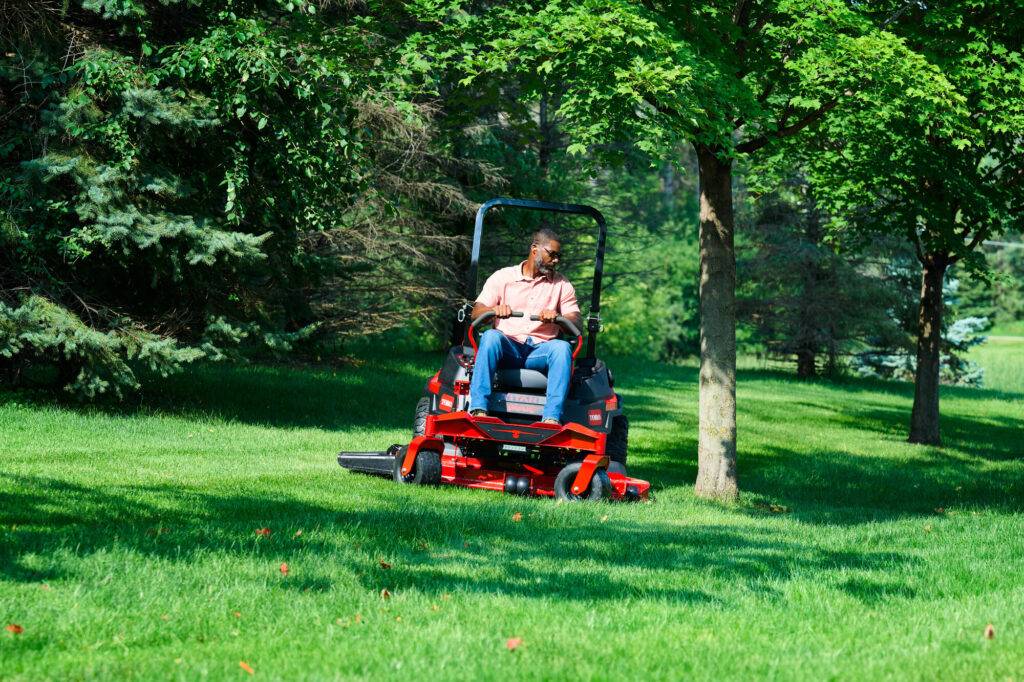
One of the most consistent mistakes buyers make is purchasing a commercial mower because it “seems more durable” — when a residential riding mower is a better fit for their actual usage pattern. Here’s the practical difference:
| Feature | Residential Riding Mower | Commercial Mower |
|---|---|---|
| Engine cycles | 1–2 hrs/day, 150–200 hrs/year | 8+ hrs/day, 1,000+ hrs/year |
| Build weight | Lighter, easier to maneuver | Heavier, more robust frame |
| Maintenance intervals | 50–100 hours | 25–50 hours (more frequent) |
| Price range | $1,500–$6,000 | $6,000–$18,000+ |
| Best for | Homeowners, small rural properties | Landscapers, municipalities, large estates |
If you’re mowing a residential property once a week during the season, a quality residential riding mower is the right tool. Commercial mowers are engineered for work that would destroy a residential machine in a season — they’re not a “better” option for homeowners, just a different category entirely.
The Brand We Recommend
At Powerline Equipment, our new riding mower inventory is exclusively Toro, organized into three tiers that cover the full range of property sizes and use cases:
Toro TimeCutter Series — Residential Zero-Turn ($4,099–$4,799) The TimeCutter line is built for homeowners with ½ to 3-acre properties. The 50″ and 54″ deck options cover most residential setups, and the MYRIDE models add an operator suspension system that meaningfully reduces fatigue on longer mow sessions. If you’re buying your first zero-turn, this is the right starting point.
Toro Titan Series — Mid-Range Zero-Turn ($6,099–$8,499) The Titan sits between residential and commercial — built heavier than the TimeCutter but without the full commercial price tag. Available in 54″ and 60″ deck configurations, these are a strong fit for larger residential properties, small hobby farms, or buyers who want more machine than the entry-level tier without stepping fully into commercial territory.
Toro Z-Master Series — Commercial Zero-Turn ($9,599–$15,699) The Z-Master 2000, 4000, and 5000 series are built for daily professional use. The 5000 Series in particular is engineered for the kind of continuous high-hour operation that residential machines simply aren’t built to handle. If you’re running a lawn care operation or maintaining a large commercial property, this is the appropriate tier.
We also carry the Toro Grandstand stand-on mower for commercial operators who prefer that format.
If you’re open to pre-owned options, we occasionally carry used riding mowers from a variety of brands at our Dalmatia location — inventory changes frequently, so check our pre-owned equipment page or call ahead for current availability.
Conclusion
Buying a riding mower comes down to knowing your property, being honest about how much you’ll actually use it, and choosing a machine built for that workload. A well-matched zero-turn from a quality brand — kept on a simple maintenance schedule — performs dependably for 10 to 15 years.
When you’re ready to make a decision, we’re here to help you get it right. Stop by Powerline Equipment at 1069 Mahantongo Creek Road in Dalmatia, call us at (717) 517-2364, or browse our current riding mower inventory at powerlineequipment.us. We’ll match you to the right machine for your property — no upsell, just the right fit.
Frequently Asked Questions
What size riding mower do I need for 2 acres?
For a 2-acre property, a mid-range zero-turn with a 54″ cutting deck is a solid starting point. If the property is mostly flat and open, the Toro TimeCutter MAX 54″ or Titan 54″ handles this range efficiently. For hillier terrain, slow down on grades and consider a larger engine for thick or wet grass conditions.
Is a zero-turn mower worth it for a residential property?
If your property is over ½ to 1 acre, a zero-turn saves real time each mow and offers better precision around trees, beds, and other obstacles. For very small or steep properties, a push mower or rear-engine riding mower may be a better match.
What's the difference between a residential and commercial riding mower?
Commercial riding mowers are engineered for 6–8+ hours of daily use. Residential models are designed for 1–2 hours per day during mowing season. Using a residential machine for commercial work accelerates wear dramatically. Conversely, buying commercial for home use is typically more machine — and maintenance burden — than the job requires.
How often does a riding mower need service?
Most residential riding mowers need an oil change every 50 hours, blade sharpening each season, air filter checks every 25 hours, and a full annual tune-up before the season starts. Buying from a local dealer makes it easy to schedule service without extended downtime. We offer repair and maintenance services at Powerline Equipment.
Does Powerline Equipment carry lawn tractors?
Our new riding mower inventory focuses on zero-turn mowers — Toro TimeCutter, Titan, and Z-Master series. We don’t currently stock new lawn tractors, though we occasionally carry pre-owned riding mowers from various brands. Check our pre-owned equipment page or call (717) 517-2364 for current availability.
Powerline Equipment | 1069 Mahantongo Creek Road, Dalmatia, PA 17017 | (717) 517-2364