

Read Time: 11 min
A common lawn mower buying mistake is buying the wrong size for your property. When you choose a mower that is too small, you end up spending your entire weekend cutting grass, putting excessive wear and tear on a residential engine. If you buy a mower that is too large, you waste money on unused capacity, struggle to navigate tight gates, and risk scalping uneven turf.
In Central Pennsylvania, this decision is even more complex. A flat, square one-acre suburban lot in another state is nothing like a rolling, one-acre homestead nestled along the Mahantongo Creek corridor. Here, acreage is only half the story; terrain, slopes, obstacles, and grass density dictate what machine will actually survive your yard.
This comprehensive guide breaks down exactly how to choose lawn mower size by acreage, tailored specifically to the unique landscapes of the Lykens Valley, Gratz, Lykens Borough, Dalmatia, Berrysburg, and Millersburg.
TL;DR / Quick Summary
Choosing the right lawn mower size starts with your acreage and terrain, but in Central PA, the hills around Lykens and Gratz add a variable most national buying guides ignore.
Key Takeaways:
- Under 1 Acre: A battery walk-behind or push mower is highly efficient and easy to store.
- 1–3 Acres: A residential riding mower or entry-level zero-turn balances speed and comfort.
- 3+ Acres: A commercial-grade zero-turn pays for itself rapidly in time saved and durability.
- Hilly Terrain: The steep slopes of the Lykens Valley require specific slope ratings—never skip this safety spec.
- The Local Advantage: Powerline Equipment in Dalmatia will size you on the spot—no guessing.
Under 1 Acre: Push Mowers and Battery Walk-Behinds
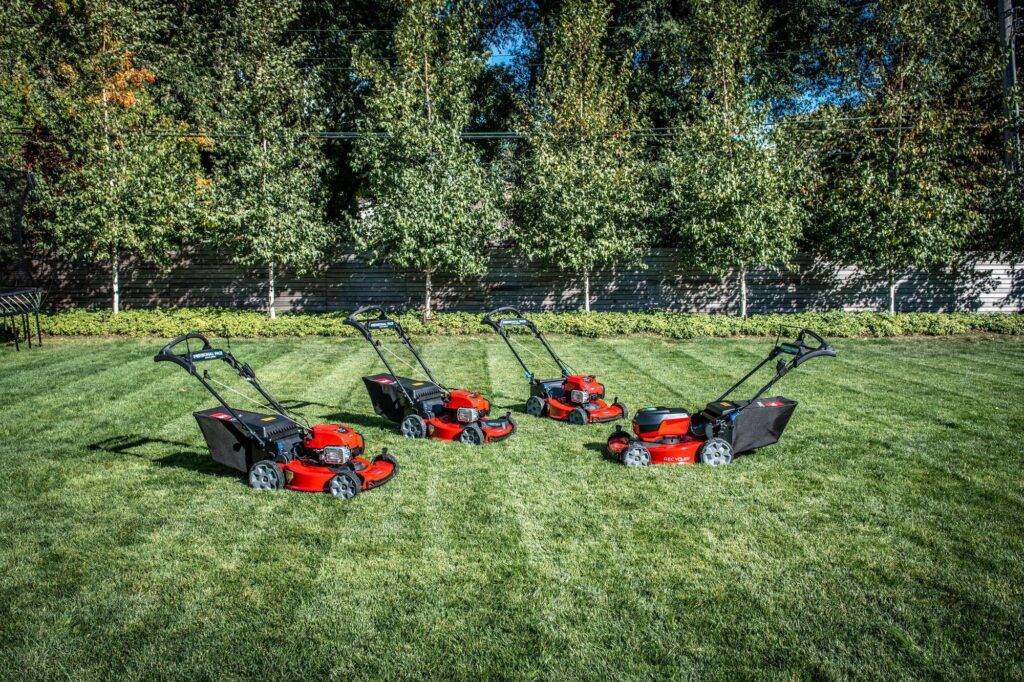
If you live within the borough limits of Gratz or Lykens, your property is likely under one acre, with a significant portion of that footprint taken up by your home, driveway, and landscaping. For these properties, a walk-behind mower is almost always the smartest choice.
Recommended Deck Widths: 21″ to 30″
For properties under an acre, a standard 21-inch to 22-inch walk-behind mower is the industry standard. It offers maximum maneuverability around flowerbeds, patios, and tight property lines.
If your yard is closer to a full acre and mostly flat, upgrading to a 30-inch wide-area walk-behind can cut your mowing time by up to 40% without requiring the storage footprint of a riding tractor.
Gas vs. Electric Walk-Behinds
The debate between gas and electric is highly relevant for small yards. Modern battery-powered walk-behind mowers offer instant starting, zero emissions, and incredibly quiet operation, which your borough neighbors will appreciate early on a Saturday morning. However, if your lawn features thick, damp Pennsylvania bluegrass, a high-torque gas mower still holds an advantage in heavy cutting conditions.
1–3 Acres: Riding Mowers and Entry-Level Zero-Turns

Once your property crosses the one-acre threshold, mowing with a walk-behind machine becomes a grueling multi-hour chore. To keep your weekends free, it is time to transition to a ride-on machine. This is typical residential territory outside Dalmatia.
Recommended Deck Widths: 42″ to 54″
• 1.0 to 1.5 Acres: A 42-inch to 46-inch deck is ideal. It is wide enough to make quick work of the lawn but narrow enough to fit through standard gates and store easily.
• 1.5 to 3.0 Acres: A 48-inch to 54-inch deck is the sweet spot. This width allows you to clear large open areas efficiently while maintaining stability on rolling ground.
Lawn Tractors vs. Zero-Turn Mowers
Traditional riding lawn tractors steer using a steering wheel and front wheels. They are excellent for straight-line mowing, are highly budget-friendly, and can tow light attachments like aerators, carts, and dethatchers. If you have a relatively open yard with few obstacles, a lawn tractor is a highly reliable workhorse.
Zero-Turn Mowers (ZTRs) are controlled by two steering levers and can spin on a dime. If your 2-acre property is dotted with trees, garden beds, outbuildings, or decorative fencing, a zero-turn will cut your mowing time in half compared to a lawn tractor.
When selecting a zero-turn, look for reputable brands with robust dealer support. You can explore our residential models on our Products page or read our detailed Existing Riding Mowers Buying Guide to compare steering configurations.
3–10 Acres: Commercial-Grade Zero-Turns and Out-Front Mowers
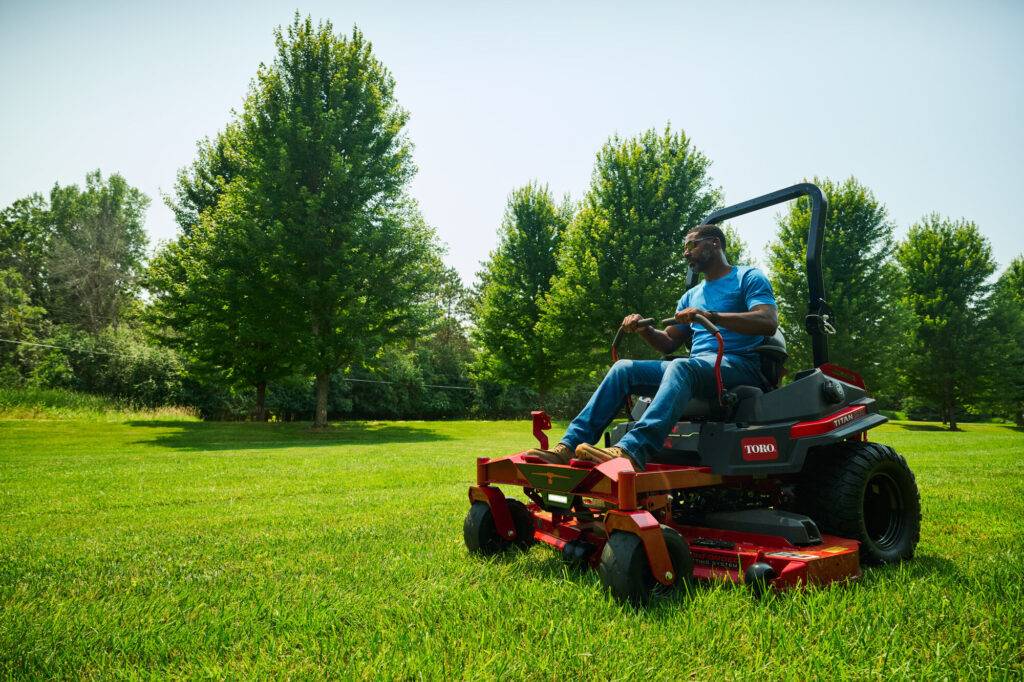
If you are managing a 5-acre hobby farm outside Berrysburg or Dalmatia, residential-grade mowers will quickly break down under the workload. Properties of this size require commercial-grade engineering.
Recommended Deck Widths: 54″ to 61″
For 3 to 10 acres, you need a deck width that can clear wide swaths of grass in a single pass. A 54-inch deck is the absolute minimum, but a 60-inch or 61-inch deck is the sweet spot for maximizing efficiency.
Why Commercial-Grade Pays for Itself
It is tempting to buy a high-end residential mower for a 5-acre property to save on upfront costs. However, residential mowers are built with sealed, non-serviceable hydrostatic transmissions designed to run 30 to 50 hours per year. If you have lots of land to care for, a commercial-grade mower is a much better choice.
Commercial-grade zero-turns feature:
- Serviceable Transmissions: Hydrostatic drives with external oil filters that can handle the heat generated by hours of continuous mowing.
- Fabricated (Welded) Steel Decks: Constructed from 10-gauge or 7-gauge welded steel plate, designed to survive impacts with rocks, tree roots, and uneven pasture ground.
- High-Horsepower Commercial Engines: Engineered with heavy-duty air filtration systems to withstand the dusty, dry conditions typical of late-summer mowing in Central PA.
10+ Acres: Commercial or Tractor Attachments
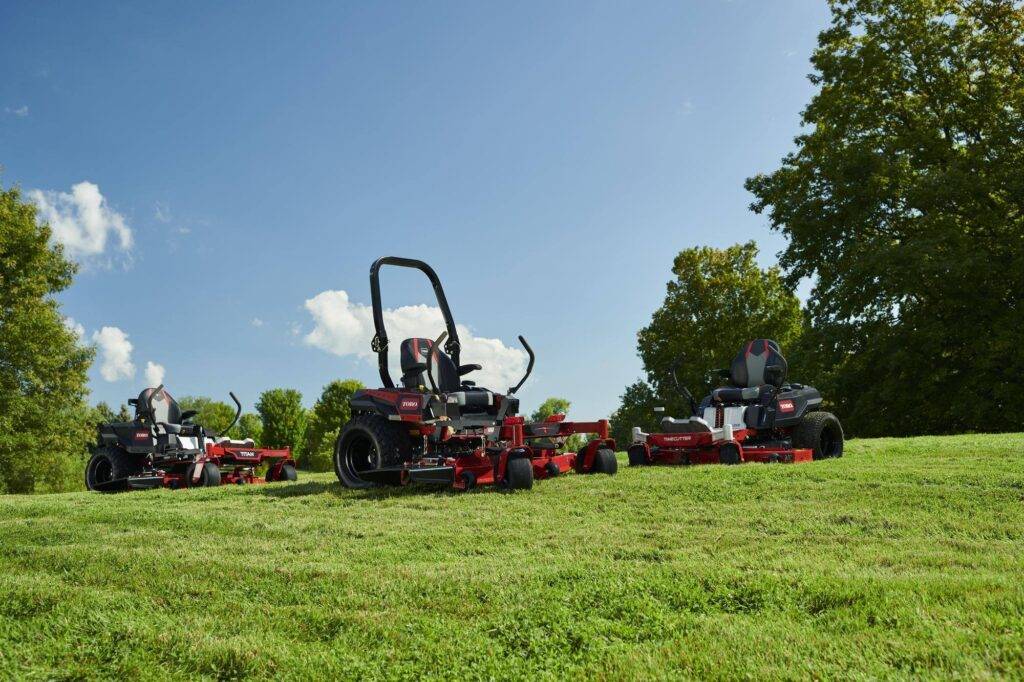
Managing more than 10 acres of turf is no longer just yard work; it is land management. This is common for working farms in the Lykens Valley corridor. At this scale, your choice is between an ultra-high-capacity commercial zero-turn or utilizing agricultural equipment.
Recommended Deck Widths: 60″ to 72″+
For properties of this scale, a 72-inch commercial zero-turn is the standard. These machines travel at mowing speeds of up to 10 to 12 mph, allowing you to clear acres of grass per hour.
The Tractor Attachment Alternative
If much of your 10+ acres consists of rough pasture, overgrown fields, or cover crops rather than manicured lawn, a zero-turn mower is not the right tool. Instead, you should look toward a sub-compact or utility tractor equipped with a three-point hitch rotary cutter (often called a brush hog) or a wide pull-behind finish mower. This setup allows you to handle tall, woody vegetation that would instantly clog or damage a standard lawn mower deck.
Why Terrain Changes Everything in Central PA
If you look at a generic national lawn mower buying guide, they will tell you that a 42-inch riding mower is perfect for 1.5 acres. What they don’t tell you is that if those 1.5 acres sit on a 15-degree hillside overlooking the Mahantongo Creek, that standard riding mower is a safety hazard. Our local geography requires careful consideration of three critical terrain factors:
Slope Ratings and Hillside Stability
According to the Outdoor Power Equipment Institute (OPEI), standard riding lawn tractors are generally rated for slopes up to 15 degrees (a 27% grade), while standard zero-turn mowers are often limited to slopes of 10 degrees (an 18% grade) because they rely entirely on the rear wheels for both drive power and steering control [1].
If you attempt to drive a standard zero-turn across a steep slope, the front caster wheels will drift downhill, causing you to lose steering control. For properties with significant slopes:
- Look for mowers with a low center of gravity and wide, aggressive rear drive tires.
- Consider a steering-wheel-controlled zero-turn, which controls all four wheels to prevent downhill sliding.
- Always consult the manufacturer’s safety documentation.
Deck Clearance and Scalping
Central PA lawns are rarely perfectly graded. If your property has rolling hills, swales, or drainage ditches, a deck that is too wide will “scalp” the high spots, cutting the grass down to the dirt and damaging your blades.
- For highly uneven terrain, a smaller deck width (e.g., 48″ instead of 54″) with anti-scalp wheels is actually preferable because it can contour to the ground more fluidly.
- Ensure your mower has a foot-assisted deck lift, allowing you to quickly raise the deck over exposed rocks, tree roots, or sudden rises in the terrain.
Soil and Grass Types
Our local soils favor cool-season grasses like Kentucky Bluegrass, Tall Fescue, and Perennial Ryegrass. These grasses grow incredibly thick and lush during our wet spring and autumn seasons.
Cutting through dense, wet cool-season grass requires high blade tip speed and excellent deck discharge velocity. If your mower is underpowered or your deck design is poor, the grass will clump, leaving an uneven cut and choking your engine.
Common Lawn Mower Sizing Mistakes to Avoid
Before you make your purchase, make sure you aren’t falling into these common traps:
1. Buying Residential for Commercial-Scale Work
- What people do wrong: Buying a $2,500 residential lawn tractor from a big-box store to mow 4 acres of rough pasture.
- Why it’s a problem: Residential machines are designed for flat, manicured lawns. Forcing them to clear large, rough acreage leads to transmission failure and engine overheating within a few seasons.
- The right approach: Invest in a machine built to handle the hours. The upfront cost of a semi-commercial or commercial machine is offset by its 10-to-15-year lifespan, compared to a residential machine that may wear out in 3 to 4 years.
2. Ignoring Gate and Obstacle Widths
- What people do wrong: Choosing a deck width based solely on acreage without measuring physical property boundaries.
- Why it’s a problem: It doesn’t matter if a 60-inch zero-turn can mow your backyard in 20 minutes if the machine cannot fit through your 52-inch backyard gate.
- The right approach: Measure your gates, trailers, and shed doors before shopping. Remember to account for the discharge chute. A 54-inch deck is actually about 67 inches wide with the plastic discharge chute down (though it can be folded up temporarily for transport or passing through tight spots).
3. Choosing Deck Width Without Considering Storage
- What people do wrong: Buying the largest deck available without verifying storage space.
- Why it’s a problem: A 61-inch commercial zero-turn is a massive machine. Leaving a high-end mower exposed to the elements in a Central PA winter will lead to premature rust, electrical issues, and dry-rotted belts.
- The right approach: Ensure you have a dry, secure place to store your machine. If storage is tight, you may need to opt for a slightly smaller deck width or invest in a dedicated storage shelter.
What You Can Handle vs. When to Call a Pro
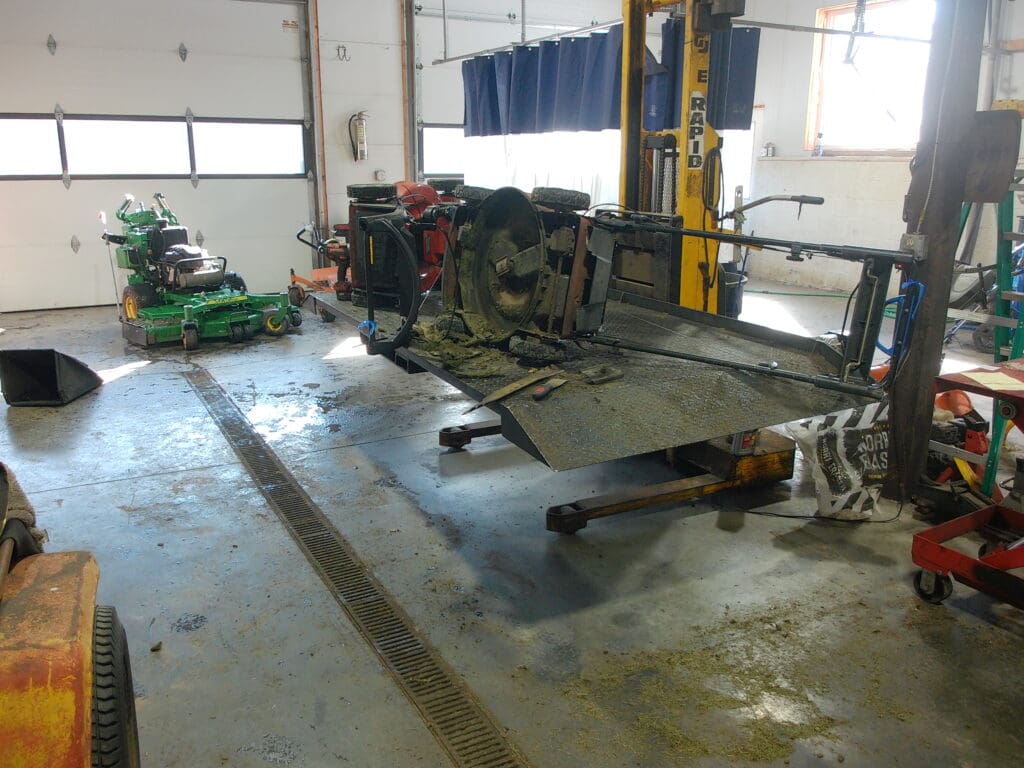
Tasks Most Homeowners Can Do
- Checking and Topping Off Fluids: Regularly checking engine oil, hydrostatic fluid, and fuel levels is safe and essential for daily operation.
- Cleaning the Deck: Scraping packed grass clippings from the underside of the deck prevents rust and maintains optimal airflow.
- Replacing Air Filters: Swapping out dirty air filters is a simple task that keeps your engine breathing clean air in dusty conditions.
Tasks for Confident DIYers
- Sharpening and Replacing Blades: Requires a torque wrench, safety gloves, and a way to safely lift and secure the front of the mower. Correct torque is critical to prevent blades from coming loose.
- Replacing Belts: Changing deck or drive belts requires basic hand tools, a belt routing diagram, and patience to navigate tight pulleys.
When to Call a Professional
- Initial Setup and Calibration: Setup and deck leveling are tasks your dealer handles at delivery; confirm this is included before purchasing.
- Hydrostatic Transmission Service: Changing hydrostatic oil and filters on commercial units requires precise purging procedures to prevent air bubbles from damaging the pumps.
- Electrical Troubleshooting: Tracking down safety switch failures, starter issues, or wiring harness shorts requires specialized diagnostic tools.
Conclusion
Choosing the right lawn mower size requires balancing your property’s acreage with the realities of your local terrain. While acreage sets your baseline deck width, the rolling hills and thick cool-season grasses of Central Pennsylvania dictate the durability, transmission strength, and safety features your machine needs to survive. Investing in a properly sized, dealer-prepped mower saves you hours of weekend labor and prevents premature equipment failure.
To take the guesswork out of your purchase, stop by our showroom at 1069 Mahantongo Creek Road in Dalmatia, PA, or call us at (570) 758-2151. You can also send us a message using the Contact Us feature on our website. Our team will be happy to assist you in finding the perfect lawn mower for your property.
Serving Dalmatia, Lykens, Gratz, Berrysburg, Millersburg, and surrounding Central Pennsylvania.
Frequently Asked Questions
What size lawn mower do I need for 2 acres?
For a 2-acre property, a zero-turn mower with a 48-inch to 54-inch cutting deck is ideal. If your property is flat and open, a 54-inch deck will allow you to finish the job in short order. If you have numerous trees, garden beds, or tight gates, a 48-inch deck offers better maneuverability.
Can I use a zero-turn mower on hills?
Yes, but with caution. Standard residential zero-turn mowers steer entirely using the traction of the rear wheels. On slopes greater than 10 to 15 degrees, the front caster wheels can slide, causing a loss of steering control. If you have steep hills, look for a zero-turn with steering-wheel control, or opt for a traditional lawn tractor, which has steered front wheels.
What’s the difference between a residential and commercial zero-turn mower?
Commercial zero-turn mowers feature heavy-duty welded (fabricated) steel decks, serviceable hydrostatic transmissions (like the Hydro-Gear ZT-3100+), and commercial-grade engines with advanced air filtration. Residential mowers use lighter stamped steel decks, sealed (non-serviceable) transmissions, and are built for fewer operating hours per year.
How wide should my mower deck be?
Your deck width should match your acreage and the narrowest obstacle on your property:
• Under 1 Acre: 21″ to 30″
• 1 to 2 Acres: 42″ to 48″
• 2 to 4 Acres: 48″ to 54″
• 4 to 10 Acres: 54″ to 61″
• 10+ Acres: 61″ to 72″
Is a riding mower worth it for 1 acre?
If your 1-acre yard is flat, open, and takes you more than an hour and a half to cut with a walk-behind mower, a riding mower is absolutely worth the investment. It will reduce your mowing time to 30–40 minutes, saving you valuable weekend hours and reducing physical fatigue.
Sources:
1. Outdoor Power Equipment Institute (OPEI) — More information about the Outdoor Power Equipment Institute (OPEI)
2. Penn State Extension — Lawn care and turfgrass management standards for Pennsylvania homeowners throughout the seasons