
Read Time: 11 min
Central Pennsylvania autumns don’t wait for your schedule. Once freezing nights settle in, untreated fuel, caked-on clippings, and skipped maintenance turn small fall chores into expensive spring repairs.
Knowing how to winterize outdoor power equipment protects your investment and saves you from fighting a stubborn pull cord when the first snow blows in. Because the region mixes river bottomland, inland valleys, and ridges, the right timing depends on where your property sits.
This guide covers mowers, handheld two-stroke tools, snowblowers, and generators, plus how to store them so they start in spring.
TL;DR / Quick Summary
Winterizing before the first hard freeze prevents the fuel, rust, and rodent problems behind most spring no-starts.
Key Takeaways:
- Inland valleys and higher ground usually frost earlier than river-corridor towns.
- Ethanol-blended gas can start breaking down in about a month, so stabilize or drain it.
- A light coat of oil in the cylinder protects the engine through months of sitting.
- Store two-stroke handheld tools with the fuel drained and the carburetor run dry.
- Check snowblower belts, shear pins, and skid shoes in fall, not during the first storm.
When to Winterize Equipment in Central PA
Central Pennsylvania’s mix of river valleys, farmland, and ridges means the first frost doesn’t arrive everywhere at once. Properties along the Susquehanna, such as those around Dalmatia and Herndon, benefit from the river’s moderating effect. They often see their first hard freeze later than inland valleys and higher ground. Low hollows can also frost early, since cold night air drains downhill and pools in low spots.
Across much of the region, the first freeze typically arrives sometime in October. Use these general windows as a starting point:
| Location type | Typical first frost | Aim to finish winterizing |
|---|---|---|
| Ridges, hollows, and inland valleys | Early to mid-October | Early October |
| Open valley farmland and towns | Mid- to late October | Mid-October |
| Susquehanna River corridor | Late October or later | Late October |
These are general patterns, not forecasts. For your area’s current outlook, check the National Weather Service State College forecast office
Lawn Mower Winterization Checklist
If you’re weighing an upgrade for next season, our guide to residential vs. commercial mowers breaks down the differences.
Most pump gas contains up to 10% ethanol (E10). Ethanol absorbs moisture from the air, and once it absorbs enough, the water-ethanol mix separates from the gasoline and sinks to the bottom of the tank or carburetor bowl. This is called phase separation. Gas left to evaporate in a carburetor also leaves behind varnish that clogs small fuel passages.
Work through these steps in order:
- Stabilize the fuel. Add fuel stabilizer at the ratio on the label, then run the engine for several minutes so treated fuel reaches the carburetor.
- Drain or fill the tank. For walk-behind mowers, close the fuel valve (if equipped) and run the engine until it stalls. For riding mowers and zero-turns, filling the tank nearly full with stabilized fuel limits the air space where condensation forms. Follow your owner’s manual.
- Change the oil while it’s warm. Used oil holds acidic combustion by-products that can corrode internal parts during storage. Refill with the grade your manual specifies, and replace the filter if your engine has one.
- Disconnect the spark plug wire. Do this before any work near the blade so the engine can’t fire accidentally.
- Fog the cylinder. Remove the spark plug and add a short burst of fogging oil or a small amount of clean engine oil. Slowly turn the engine over a few times to coat the cylinder wall, then reinstall the plug.
- Clean the deck. Scrape caked clippings from the underside, since they hold moisture against the steel and speed up rust. If you tip a walk-behind mower, keep the air filter and carburetor side up.
- Sharpen and balance the blades. Sharpen along the existing factory bevel and balance the blade before reinstalling. Replace any blade that is bent or cracked.
- Maintain the battery. On riding mowers, disconnect the negative terminal first and clean the terminals. Keep the battery on a smart maintainer somewhere dry and above freezing.
Chainsaws and Handheld Equipment Storage
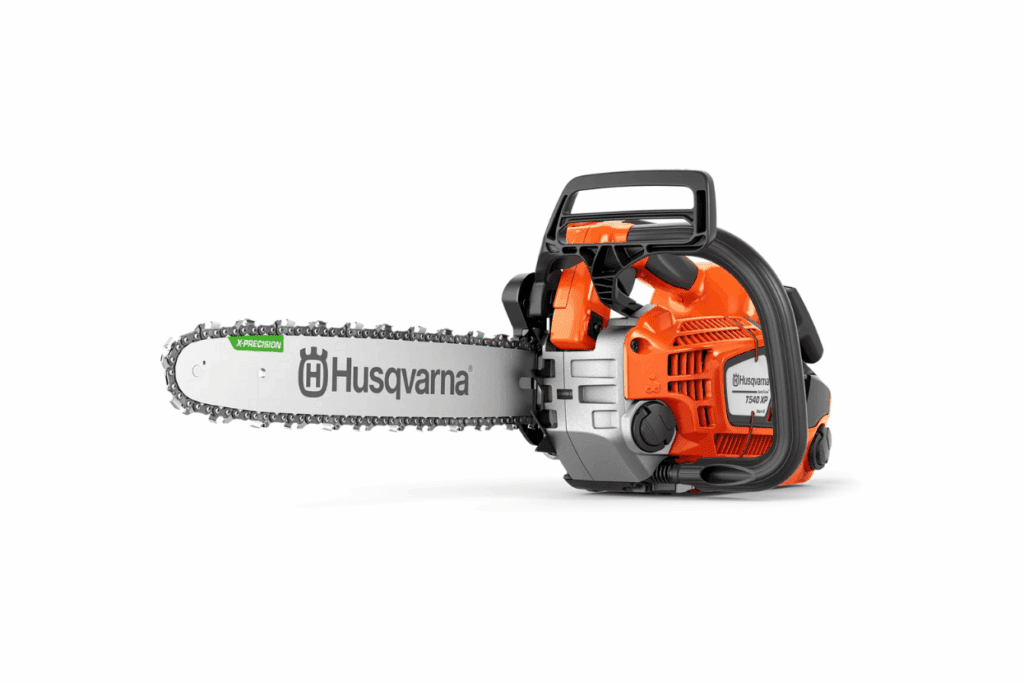
Chainsaws, trimmers, and blowers run two-stroke engines with small carburetors that rely on thin rubber diaphragms and tiny fuel passages. Stale fuel is one of the most common reasons these tools won’t start in spring. Battery-powered tools skip most of these steps. Read our gas vs. electric equipment comparison to learn more about the difference.
- Drain the fuel. For long storage, most manufacturers recommend emptying the tank, pressing the primer bulb several times, then running the engine until it stalls. Check your manual, since some ethanol-free premixed fuels are rated for longer storage.
- Check the fuel lines. Lines that feel stiff or show cracks should be replaced before spring.
- Clean the air filter. Wash foam filters and clean paper or felt elements according to your manual.
- Clean the bar and chain. Remove the clutch cover and clear sawdust and pitch from the bar groove and sprocket area. Then wipe the chain with light oil.
- Plan for bar oil. Standard bar oil thickens in cold weather, so consider a winter-grade oil if you cut firewood all winter. For storage, follow your manual’s guidance on the oil reservoir and set the saw on a drip tray in case it weeps.
- Inspect the spark arrestor. If your muffler has a removable screen, brush off carbon buildup or replace it. A clogged screen restricts exhaust and cuts power.
Snowblower Pre-Season Prep
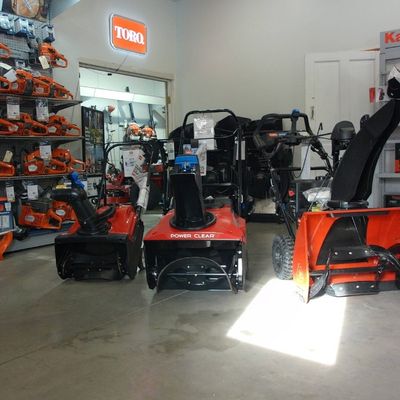
Central PA snow ranges from light powder to heavy, wet slush, so your snowblower needs good belts and solid traction. Checking it in fall gives you time to get parts before the first storm.
- Inspect the belts. Remove the belt cover and look for cracks, glazing, or fraying. A slipping auger belt will clog under heavy snow.
- Stock spare shear pins. Shear pins are designed to break when the auger hits a rock or chunk of ice, which protects the gearbox. Replace them only with the manufacturer’s shear pins. A standard bolt won’t break, so the damage passes to the gearbox instead. Keep a few spares on the machine.
- Check the gearbox lubricant. If your auger gearbox has a fill plug, check the level and top off with the lubricant your manual specifies. Some gearboxes are sealed and don’t need routine checks.
- Set the skid shoes. On paved driveways, set the scraper bar about 1/8 inch above the surface. On gravel lanes, raise the skid shoes so the scraper rides roughly 1/2 inch or more above the ground to avoid throwing stones.
- Test-start outdoors. Fill with fresh, stabilized fuel at the octane your manual calls for, then start the engine outside, never in a closed garage. Let it warm up and confirm the chute and deflector move freely.
Generator Winterization and Load Testing
When ice and snow bring down limbs on rural power lines, outages can last more than a day. Months of sitting idle make stale fuel and weak batteries likely, so test your generator before you need it.
Always run a generator outdoors, well away from doors, windows, and vents. Generator exhaust can build up dangerous carbon monoxide levels quickly.
Run a real load test
Letting a generator idle with nothing plugged in doesn’t prove much. Plug in resistive loads such as space heaters or work lights totaling roughly half the generator’s rated running watts. Spread them across receptacles so no single outlet is overloaded. Run it for 20 to 30 minutes to bring the engine to operating temperature and confirm it holds steady output under load.
Choose a fuel strategy
- Keep it ready: Fill the tank nearly full with stabilized fuel, shut the fuel valve, and run the engine until the carburetor is empty.
- Store it dry: If you won’t need it for months, drain the tank and run the engine until it stalls. Then empty the carburetor bowl through its drain screw, if equipped.
Keep the battery charged
Cold weather significantly reduces a battery’s cranking power. Keep electric-start generators on a smart battery maintainer, and confirm you can still start the unit with the recoil cord.
Storage Tips for Barns, Sheds, and Outbuildings

Many rural properties in Dauphin and Northumberland counties store equipment in bank barns, pole buildings, or unheated sheds. These keep the snow off but bring two winter problems: humidity swings and mice.
| Storage hazard | What it causes | How to prevent it |
|---|---|---|
| Damp floors | Moisture and rust on tires, rims, and decks | Park on wood planks or rubber mats |
| Mice | Chewed wiring, nests in cooling fins and intakes | Block openings, use deterrents, inspect in spring |
| Plastic tarps | Trapped condensation and surface rust | Use breathable canvas or vented covers |
Keep mice out
As temperatures drop, mice move into outbuildings and nest in engine compartments. They chew wiring insulation and pack nesting material between cooling fins, which can cause an engine to overheat soon after startup.
- Block entry points. Loosely plug the muffler outlet and air intake with steel wool. Tie a reminder tag to the handlebar or steering wheel so you remove it before starting.
- Use deterrents. Some owners use repellent packs or peppermint-oil-soaked cotton balls near the engine. Avoid poison baits where pets or livestock could reach them.
- Inspect before spring startup. Check the cooling fins and air intake for nests before the first start.
What You Can Handle vs. When to Call a Pro
Tasks Most Homeowners Can Do
- Stabilizing or draining fuel: Low-risk with basic precautions.
- Oil changes, air filters, and spark plugs: Hand tools and an oil pan.
- Skid shoe adjustments and shear pin replacement: Basic wrench work.
Tasks for Confident DIYers
- Blade sharpening and balancing: Requires blocking the blade safely and a balancer.
- Fogging cylinders: Requires spark plug removal.
When to Call a Professional
- Surging engines and carburetor adjustments: Many modern carburetors have limited adjustment that requires special tools.
- Chainsaw clutch or chain brake problems: A chain brake that doesn’t stop the chain instantly is a safety issue.
- Hydrostatic transmission, spindle bearing, and gearbox repairs: These need specialized parts and experience.
- Generators with no output or unstable voltage: Electrical diagnosis involves live components.
- Red flags requiring immediate professional attention: Fuel leaks, smoke, knocking noises, or a chain that keeps moving after the brake engages.
Conclusion
A few hours of fall maintenance prevents most of the fuel, rust, and rodent problems that keep equipment from starting in spring. Stabilize or drain your fuel, protect the engine internals, and test your snowblower and generator before you need them.
If your fall schedule is full or you’d rather have a professional handle it, we’re happy to help. Our service department handles seasonal maintenance and small engine repair. Contact us to schedule service, or bring your equipment by our shop in Dalmatia.
Serving Dalmatia, Lykens, Gratz, Berrysburg, Elizabethville, Herndon, Halifax, Tower City, Liverpool, Millersburg, Duncannon, Port Trevorton, and the surrounding Lykens Valley area.
Frequently Asked Questions
When should I winterize my lawn mower in Pennsylvania?
Winterize your lawn mower after your last cut of the season, usually between early October and early November in central Pennsylvania. Properties on higher ground or in inland valleys tend to see frost earlier, while those along the Susquehanna often have a little more time.
Do I need to drain my snowblower at the end of winter?
Yes. Before summer storage, either drain the tank and run the engine dry, or fill it with stabilized fuel and run the carburetor dry, following your owner’s manual. Gas left in the carburetor all summer can leave varnish that clogs fuel passages.
How do I prepare a lawn mower for winter storage?
To prepare a lawn mower for winter storage, stabilize or drain the fuel, change the oil, fog the cylinder, clean the deck, and sharpen the blades. On riding models, also maintain the battery. Disconnect the spark plug wire before working near the blade, and store the mower clean and dry.
What’s the best fuel stabilizer for outdoor power equipment?
The best fuel stabilizer is one labeled for small engines and used at the ratio printed on the bottle. Quality stabilizers slow fuel breakdown and help limit corrosion during seasonal storage. Add it to fresh gas, since stabilizer can’t restore fuel that has already gone stale.
Should I store equipment in a barn or a heated garage?
A heated or insulated garage is ideal because it limits temperature swings and condensation. An unheated barn or shed works fine if you keep equipment off damp floors, use a breathable cover instead of a plastic tarp, and keep mice out of the engine area.
Why is non-ethanol gas recommended for small engines?
Ethanol-free gas doesn’t absorb moisture the way ethanol blends do, so it’s less prone to phase separation and corrosion during storage. Many small-engine manufacturers recommend it when available, especially for equipment that sits for long periods. It’s often sold as “Rec 90” or recreational fuel.
Can I leave my mower battery in the machine over winter?
You can leave the battery in place if you disconnect the negative terminal and keep it on an automatic maintainer. If your storage building has no power, remove the battery and store it somewhere cool, dry, and above freezing. A discharged lead-acid battery can freeze and crack in cold weather.
Related Resources
- Powerline Equipment Service & Repair
- Gas vs. Electric Outdoor Power Equipment
- Residential vs. Commercial Outdoor Power Equipment
Sources