
Read Time: 8 min
If you manage land along the Lykens Valley corridor, you know our Central Pennsylvania landscape presents severe demands on power equipment. From 5-acre horse properties outside Gratz to working woodlots near Dalmatia and steep, rolling lawns above Lykens Borough, maintaining local land requires high-torque performance and durable machinery.
Many property owners start with standard residential equipment purchased from big-box retailers. For flat, half-acre lots cut once a week, residential mowers perform adequately. However, as property size expands past 3 acres, fence lines multiply, and seasonal cleanup grows heavier, residential equipment begins to show structural strain. Belts slip in wet orchard grass, stamped decks crack on limestone outcroppings, and sealed transaxles overheat on hillside grades.
Recognizing when your residential tools stop keeping up is essential to avoiding continuous repair bills. In our experience working with property owners across Dauphin and Northumberland counties, upgrading to commercial equipment at the right time transforms property maintenance from a constant struggle into an efficient, cost-effective operation.
TL;DR / Quick Summary
For Lykens Valley property owners managing 3 or more acres, commercial-grade outdoor power equipment is not an unnecessary luxury; it delivers a lower cost-per-hour and saves hundreds of labor hours over a 5-year ownership period.
Key Takeaways:
- Residential gear is built primarily for under 3 acres and lighter seasonal use.
- Commercial OPE features heavy-duty 7-gauge fabricated steel decks and fully serviceable hydraulic drives.
- Commercial engine components carry significantly higher continuous duty-cycle ratings than residential units.
- Purchasing commercial equipment yields lower 5-year depreciation and higher resale value despite a higher initial purchase price.
- Powerline Equipment in Dalmatia provides local testing, flexible financing, and factory-certified service.
What Makes Equipment “Commercial Grade”?
The distinction between residential and commercial outdoor power equipment is not mere marketing terminology. It represents fundamental differences in metallurgy, fluid dynamics, engine architecture, and duty cycle engineering.
1. Duty Cycle and Engine Ratings
Residential engines are typically rated for 50 to 100 operating hours per season, engineered for short runs on flat turf. They often use splash lubrication and single-stage foam air filters that require frequent cleaning in dry pasture dust.
Commercial engines, such as Kawasaki FX-series, Kohler Command PRO, or Briggs & Stratton Vanguard lines, are rated for continuous daily operation (often exceeding 2,000 total service hours). They feature full-pressure lubrication with heavy-duty oil coolers and dual-element canister air filtration systems (Donaldson-style) that trap fine debris before it reaches internal cylinders.
2. Deck Construction: Stamped Steel vs. Fabricated Steel
Residential mowers use 12-gauge to 14-gauge stamped steel decks (roughly 0.074 to 0.104 inches thick). Stamped steel is lightweight and inexpensive to manufacture, but it flexes on rough terrain and can dent or puncture when striking hidden rocks.
Commercial mowers feature heavy-duty fabricated (welded) steel decks constructed from 7-gauge or 10-gauge structural steel (0.135 to 0.179 inches thick). These decks are reinforced with 7-gauge top plates, heavy tubular steel C-channel frames, and bullnose steel bumpers to absorb heavy impacts without deforming.
3. Transmissions and Hydraulic Systems
Residential zero-turns use light-duty, sealed transaxles (such as Hydro-Gear EZT series) that lack internal oil filters or drain plugs. Operating these sealed units continuously under heavy loads or on steep grades causes thermal breakdown of the fluid, leading to premature transaxle wear.
Commercial machinery utilizes heavy-duty, fully serviceable hydrostatic drive systems (such as Hydro-Gear ZT-3400, ZT-4400, or heavy commercial Parker drive systems). These systems incorporate external expansion tanks, spin-on 10-micron oil filters, and high-pressure charge pumps capable of continuous operation under heavy thermal loads.
Residential OPE: Best for Under 3 Acres and Light Seasonal Use

Residential outdoor power equipment remains the correct economic choice under specific property conditions. Investing in commercial-grade machinery is unnecessary if your workload remains within standard residential limits.
Ideal Residential Use Cases:
- Small Acreage: Properties measuring under 3 total acres with generally flat terrain.
- Low Operating Hours: Mowing once weekly during the spring and summer, accumulating fewer than 50 hours annually.
- Protected Storage: Equipment stored inside a dry garage or shed between uses.
- Upfront Capital Limitations: Homeowners who prioritize a lower initial purchase price over extended multi-season equipment longevity.
When maintained with annual oil changes, sharp blades, and fresh fuel, quality residential tractors and push mowers reliably serve small properties for 5 to 7 years.
Commercial OPE: Built for 3+ Acres, High Hours, and Rugged Terrain

When managing larger acreage or challenging terrain across the Lykens Valley, residential equipment quickly reaches mechanical overload. Property owners near Berrysburg or Elizabethville frequently encounter thick turf, damp lowlands, and steep field inclines that require commercial torque.
When Commercial Equipment Becomes Necessary:
- Acreage Thresholds (3 to 10+ Acres): Mowing 5 acres with a narrow 48-inch residential mower can take up to 4+ hours per cut. Stepping up to a 60-inch commercial zero-turn with higher ground speed can reduce mowing time down to 1.5 to 2 hours while delivering a cleaner finish.
- Rough and Mixed Topography: Navigating rolling pastures, clearing brush lines, or mowing roadside ditches requires high-torque wheel motors and reinforced frame integrity.
- Multi-Task Attachments: Towing heavy utility carts, aerators, or seeders demands heavy-duty axle bearings and high frame load capacities.
- Time Constraints: For working landowners, cutting property maintenance labor roughly in half frees up critical hours for agriculture, forestry, or family activities.
The Cost Math: When Commercial Equipment Pays for Itself
Evaluating equipment purely on initial purchase price overlooks total cost of ownership. Over a 5-year operating window, commercial machinery frequently proves more economical than repeatedly replacing or repairing overworked residential units.
Illustrative 5-Year Ownership Cost Comparison (5-Acre Property Example)
The figures below represent an illustrative scenario assuming 75 operating hours per season (375 total hours over 5 years) to demonstrate long-term economic trade-offs:
| Cost Category | High-End Residential Mower | Commercial Zero-Turn (Mid-Grade) |
| Est. Purchase Price | $4,500 | $9,500 |
| Engine/Deck Design Life | ~300–400 hours | 2,500+ hours |
| Est. Spindle & Deck Repairs (5 Yrs) | $600 (stamped deck/spindle repairs) | $0 (cast-iron commercial spindles) |
| Est. Transmission Maintenance (5 Yrs) | $1,200 (transaxle service/repair) | $150 (routine fluid & filter changes) |
| Est. Labor Hours (5 Yrs) | ~375 hours (@ ~1.0 acre/hr) | ~150 hours (@ ~2.5 acres/hr) |
| Est. Owner Time Saved | 0 hours | ~225 hours saved |
| Est. Resale Value After 5 Years | ~$800 | ~$5,500 |
| Illustrative Net Depreciation & Maintenance | $5,500 net cost | $4,150 net cost |
Note: Table data reflects illustrative estimates based on average retail pricing and standard dealer labor rates.
Even before factoring in the personal value of over 200 hours of saved labor, the commercial machine achieves a significant net savings over 5 years due to slower depreciation and lower unexpected repair overhead.
Best Commercial Brands for Central PA Conditions
Selecting the right commercial equipment brand ensures local access to replacement parts, factory warranty support, and mower decks engineered for dense Pennsylvania turf.
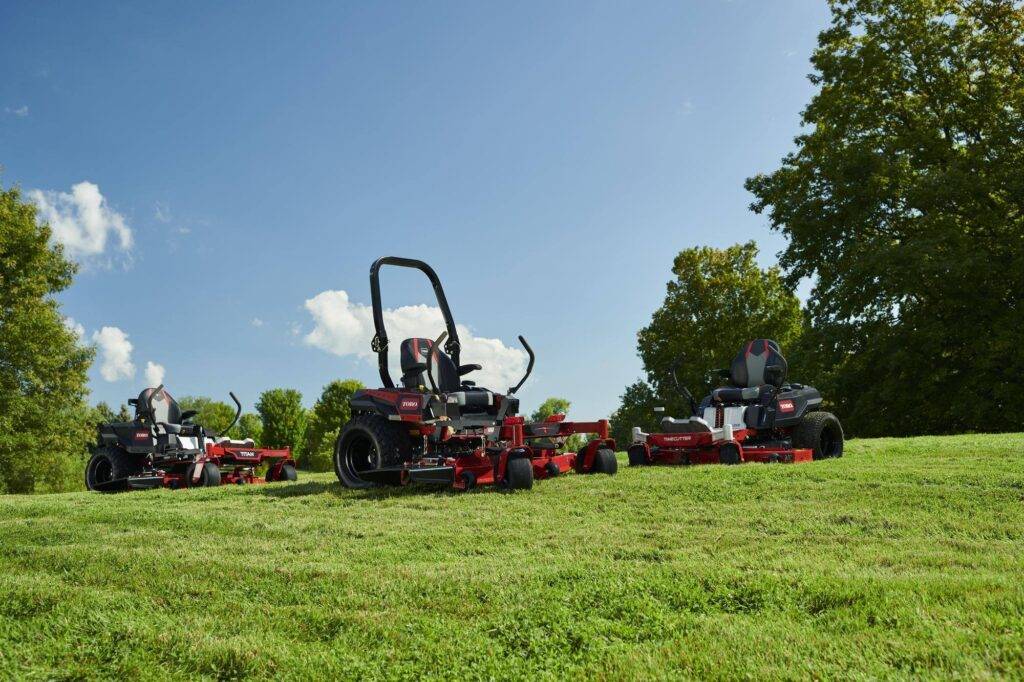
1. Toro Commercial Product Line

Toro commercial equipment is engineered for high-capacity turf cutting and operator comfort.
- TURBO FORCE® Decks: Per Toro’s official product specifications, fabricated from high-strength 7-gauge steel with adjustable discharge baffles that prevent clump accumulation when cutting damp spring grass.
- MyRIDE® Suspension System: Suspends the operator platform on adjustable shocks, insulating the operator from severe bumps across uneven pasture ground.
- Best Suited For: Estate properties in Gratz and hillside acreage in Lykens where terrain roughness causes operator fatigue.
2. Husqvarna Commercial Product Line
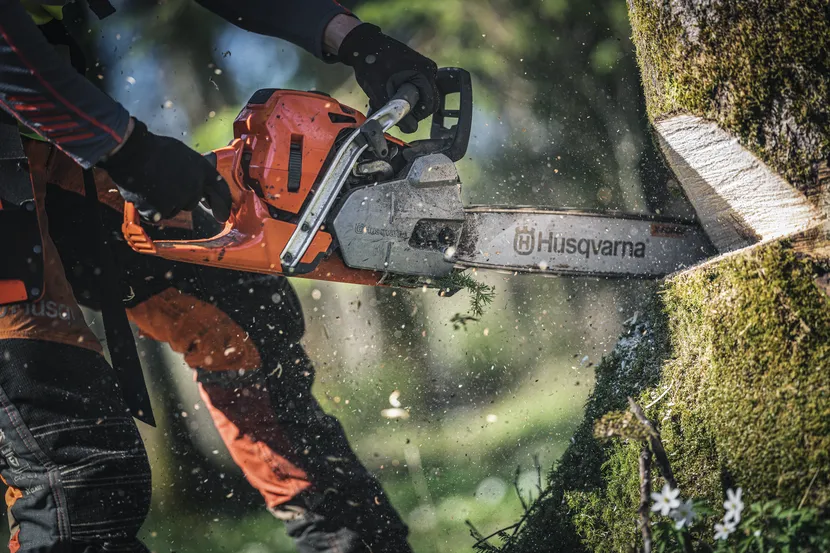
Husqvarna manufactures rugged commercial zero-turn mowers and heavy-duty outdoor power tools built for demanding environments.
- Husqvarna Z500 Series: Equipped with heavy tubular steel frames, commercial hydraulic drives, and high-blade-tip-speed cutting decks.
- Commercial Forestry & Handhelds: High-torque chainsaws and brushcutters built for heavy land clearing and woodlot maintenance.
- Best Suited For: Property owners near Dalmatia managing working woodlots, dense overgrown fence lines, and rugged farm fields.
What You Can Handle vs. When to Call a Pro
Understanding your maintenance limits keeps your power equipment running safely and prevents expensive mechanical errors.
Tasks Most Homeowners Can Do
- Air Filter Cleaning: Inspecting and replacing paper or foam air filter elements every 25 to 50 operating hours.
- Blade Sharpening & Balancing: Removing mower blades seasonally to sharpen cutting edges and balance them before reinstallation.
- Deck Cleaning: Scraping built-up grass clippings from underneath the deck after mowing wet grass to prevent corrosion.
Tasks for Confident DIYers
- Engine Oil & Filter Changes: Draining engine oil and replacing spin-on filters every 50 to 100 hours (requires oil drain pan, filter wrench, and socket set).
- Spark Plug Replacement: Gapping and replacing spark plugs annually using a spark plug socket and feeler gauge.
- Belt Inspection & Replacement: Checking hydro drive belts and deck drive belts for cracking or glazing, and installing tensioned replacement belts.
When to Call a Professional
- Hydrostatic Transmission Flushing: Changing hydraulic fluid and internal filters on commercial hydrostatic drives requiring specific fluid bleed procedures.
- Engine Governor & Carburetor Adjustment: Calibrating engine RPM settings or diagnosing fuel delivery issues requiring specialized pressure gauges.
Red flags requiring immediate professional attention:
- Metallic grinding sounds coming from spindle housings or transaxles.
- Rapid, unexplained loss of hydraulic drive power on one side.
- Persistent blue smoke from the engine exhaust indicating internal oil burning.
- Deep structural frame cracks near engine mounts or front caster pivots.
Common Outdoor Power Equipment Upgrade Mistakes
Upgrading to commercial equipment is a major investment. Avoiding these common mistakes ensures you select the correct machine for your property needs.
1. Waiting Until Repeated Residential Failures Occur
What people do wrong: Homeowners often sink significant money annually into repairing an underpowered residential mower long after its frame and transmission have worn out.
Why it’s a problem: Money spent patching an undersized machine is wasted capital that could have funded a commercial down payment.
The right approach: Upgrade to commercial equipment when your property size or annual hours exceed residential ratings, before major component failures occur.
2. Buying Commercial Equipment Without Local Service Support
What people do wrong: Purchasing commercial machinery online or from non-servicing liquidators to save a small upfront amount.
Why it’s a problem: Commercial machines require routine maintenance parts, hydraulic servicing, and technical support. Lack of dealer support leads to extended downtime during peak mowing season.
The right approach: Purchase commercial gear through an authorized local dealer who stocks OEM replacement parts and provides certified warranty service.
3. Ignoring Gate Clearances and Trailer Dimensions
What people do wrong: Selecting a 60-inch or 72-inch commercial deck without measuring shed doors, fence gates, or transport trailers.
Why it’s a problem: Wider commercial decks and ROPS (Roll-Over Protective Structures) may not fit through standard 48-inch shed doors or onto compact utility trailers.
The right approach: Measure all gateway access points, storage clearances, and trailer dimensions before finalizing your deck size.
4. Overlooking Flexible Dealer Financing
What people do wrong: Assuming commercial equipment must be paid in full with upfront cash, leading buyers to settle for an underpowered machine.
Why it’s a problem: Settling for an undersized machine restarts the cycle of equipment strain and premature mechanical failure.
The right approach: Take advantage of competitive dealer financing options that allow you to acquire commercial performance for low monthly payments while preserving capital.
Conclusion
Upgrading to commercial outdoor power equipment is one of the most effective decisions you can make to streamline property management across the Lykens Valley. By choosing commercial-grade machinery from trusted manufacturers like Toro, Husqvarna, RedMax, and Encore, you protect your time, reduce repair frustration, and secure long-term equipment value.
If you are unsure which deck size, engine displacement, or transmission grade fits your property, we are happy to assist you. Visit Powerline Equipment in Dalmatia to inspect equipment specs, compare models side-by-side, and test ride commercial machinery today, or contact us on our website.
Serving Dalmatia, Lykens, Gratz, Berrysburg, Millersburg, and surrounding Central Pennsylvania.
Frequently Asked Questions
What’s the difference between residential and commercial lawn mowers?
Commercial mowers utilize 7-gauge fabricated steel decks, commercial heavy-duty engines, fully serviceable hydraulic transmissions, and heavy steel frames. Residential mowers use 12-gauge stamped steel decks, sealed non-serviceable transmissions, and light-duty engines built for lighter seasonal use.
How many hours per year justifies commercial-grade equipment?
If you operate your equipment more than 50 to 75 hours per season, or manage properties over 3 acres, commercial equipment is strongly justified. Commercial components handle extended heat loads without premature wear, delivering lower lifetime operating costs.
Is a commercial zero-turn worth it for a 5-acre property?
Yes. On a 5-acre property, a commercial zero-turn mower can cut mowing time significantly compared to a residential tractor while providing a superior cut quality. It also helps to eliminate transaxle overheating on rolling Central PA hillsides.
What does “duty cycle” mean on outdoor power equipment?
Duty cycle refers to the continuous operating load and stress level an engine, transmission, or frame can withstand without mechanical failure. Commercial duty-cycle components are engineered for continuous, multi-hour daily operation in demanding environments.
Can I finance commercial equipment through Powerline Equipment?
Yes. Powerline Equipment offers promotional dealer financing programs for commercial equipment purchases. Qualified buyers can access zero-down options and flexible monthly terms upon credit approval.
Related Resources
- Residential Mowers — https://powerlineequipment.us/residential-mowers/
- Commercial Mowers — https://powerlineequipment.us/commercial-mowers/
- Lawn Mower Sizing Guide — https://powerlineequipment.us/how-to-choose-the-right-size-lawn-mower-for-your-property-in-central-pennsylvania/
- Riding Mowers Buying Guide — https://powerlineequipment.us/riding-mowers-buying-guide-how-to-choose-the-right-option-for-your-property/
- Contact Us — https://powerlineequipment.us/contact-us/
Sources:
- Toro Commercial Lawn & Turf Equipment — Official manufacturer product specifications for Z Master® commercial mowers.