
Read Time: 6 Minutes
You pull the starter cord, and… nothing. Whether you’re a homeowner in Dalmatia facing the first mow of the spring or a professional landscaper with a crew waiting to start the day, a dead small engine is more than an inconvenience—it’s a work stopper.
At Powerline Equipment, we’ve diagnosed thousands of small engines. While some issues require a certified technician, many “won’t start” scenarios can be solved with a few simple checks. This guide walks you through the most common culprits, how to fix them, and how to know when it’s time to call in the pros.
TL;DR: The Quick Fix Checklist
If you’re in a hurry, check these four things first:
- Fresh Fuel: If your gas is older than 30 days, drain it and use fresh fuel with a stabilizer.
- Spark Plug: Ensure the lead is connected and the plug isn’t fouled or blackened.
- Oil Level: Many engines won’t start if the oil is below the “Add” line.
- Safety Switches: Ensure the blade engagement (PTO) is OFF and you are firmly in the seat.
Table of Contents
Lawn Mower Safety and Fuel System Checklist
Before you start taking things apart, check the “obvious” fixes. You’d be surprised how many service calls are solved by these five items.
- Fuel Freshness: This is the #1 issue in Pennsylvania. Modern ethanol-blended gasoline begins to degrade in as little as 30 days. If your fuel has been sitting in the tank since last fall, it has likely gummed up the system.
- The Spark Plug: Remove the lead and inspect the plug. If it’s blackened with carbon or wet with fuel, your engine won’t fire.
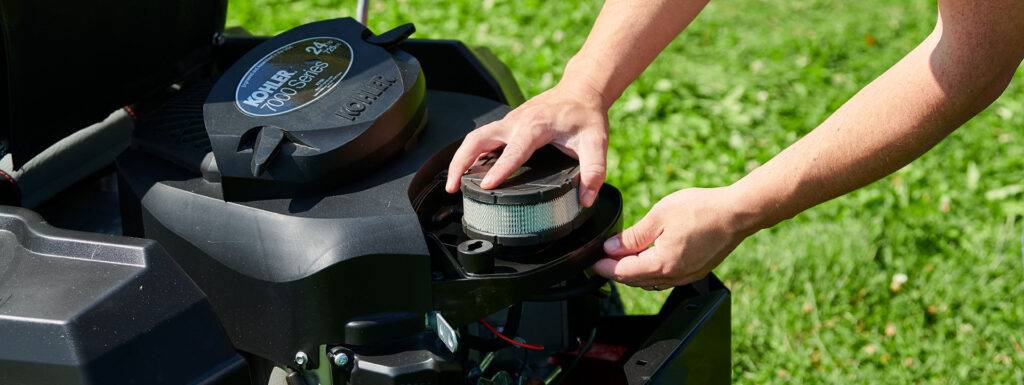
- Air Filter: A clogged filter “strangles” the engine. If it’s caked with dust from a dry PA summer, your engine can’t breathe.
- Oil Levels: Many modern engines have a “Low Oil Shutoff.” If your oil is low, the engine will refuse to spark to protect itself from seizing.
- Safety Switches: Check the seat switch, the blade engagement (PTO) lever, and the brake. If any of these aren’t in the “start” position, the ignition circuit remains broken.
🔧 DIY Difficulty: Easy | Time: 5 Minutes
Small Engine Troubleshooting: Diagnosing Common Symptoms
To fix the problem, you first have to listen to what the engine is telling you.
Scenario A: The Engine Cranks but Won't Fire
If the engine is turning over (the “rrr-rrr-rrr” sound) but won’t catch, the issue is usually Fuel or Spark.
- The Fix: Try a fresh tank of fuel and a new spark plug. If it still won’t fire, the carburetor likely needs a professional cleaning to remove “varnish” left behind by old gas.
💡 Pro Tip: The Ethanol-Free Advantage
If you want to avoid 90% of fuel-related starting issues, switch to Ethanol-Free gasoline (often labeled as Rec 90). Ethanol attracts moisture and creates a corrosive “gel” in your carburetor. Using ethanol-free fuel, especially before storing your equipment, is the single best thing you can do for your engine’s longevity.
Scenario B: The Engine Won't Crank at All
If you turn the key or pull the cord and get total silence or a single “click,” the issue is Electrical or Mechanical.
- The Fix: For electric-start mowers, check the battery voltage. For pull-starts, if the cord is stuck and won’t move, the engine may be mechanically seized or the starter pawls are broken. Stop pulling immediately to avoid further damage.
Scenario C: It Starts, Then Dies Immediately
This is almost always a Fuel Delivery issue.
- The Fix: The engine has enough fuel to start (often using the “choke” or “prime”), but once it runs, it can’t pull enough fuel to stay alive. This usually points to a clogged fuel filter or a dirty carburetor jet.
Small Engine Maintenance for Pennsylvania’s Climate
Our local weather in the Susquehanna Valley plays a huge role in engine health.
- Humidity & Ethanol: PA’s humid summers cause ethanol in gas to attract water (phase separation). This water sinks to the bottom of your tank and is the first thing sucked into your engine, causing instant failure.
- Winter Storage: If equipment isn’t winterized properly for our freezing winters, seals can shrink and fuel can turn into a thick gel that ruins carburetors.

Professional Small Engine Repair in Dalmatia, PA
DIY is great for maintenance, but some repairs require specialized tools and certification. You should call us if:
- You smell a strong scent of raw gas: This indicates a leak and is a fire hazard.
- The engine makes a “clunking” or “metallic” sound: This suggests internal mechanical failure.
- You see blue or white smoke: This means the engine is burning oil or has a blown head gasket.
- You’ve tried the basics and it still won’t go: Don’t waste your weekend struggling. We offer fully customizable service packages for small engines of all types! From handhelds at $40-$50 on the low end, push and walk-behind mowers at $60-$80, or zero-turns at $180-$250 (excluding parts), we can service your equipment however you want to get you back on the road as soon as possible.
Lawn Mower Repair vs. Replacement: When to Upgrade
Is it worth fixing? We generally recommend the 50% Rule: If the repair cost is more than 50% of the price of a new machine, and the machine is more than 8 years old, it might be time to upgrade.
- Need a new machine? We are an authorized Toro dealer offering mowers that are built to last. Check out our Riding Mowers Buying Guide to see the latest Toro models.
Conclusion: Get Back to Work
A mower that won’t start shouldn’t ruin your week. Start with the fuel and the plug, and if that doesn’t work, let the experts handle it.
Ready to get your equipment running like new? Schedule Your Spring Tune-Up or Diagnostic Service Today Call us: (717) 517-2364 Visit us: 1069 Mahantongo Creek Road, Dalmatia, PA
Frequently Asked Questions (FAQ)
Can I use starter fluid to get my mower going?
You can use it sparingly to diagnose a fuel issue, but never rely on it. Starter fluid lacks the lubrication your engine needs and can cause damage if used excessively.
How often should I change my spark plug?
We recommend replacing your spark plug once a year or every 50 hours of use to ensure reliable starting.
Why does my mower start fine when cold but won't restart when hot?
This is often a sign of an ignition coil failing or valves that need adjustment. When the engine gets hot, these components expand and can lose the ability to create a spark or maintain compression.
Is "Premium" gas better for my small engine?
The octane rating matters less than the ethanol content. If you can find ethanol-free fuel (often sold as "Rec 90"), that is the best choice for small engines in Pennsylvania.
Serving Dalmatia, Millersburg, Gratz, Lykens, Herndon, Berrysburg, Halifax, Williamstown, Tower City and the surrounding communities.